All locations will be closed on Monday, May 25th to celebrate Memorial Day.
Allergy testing is an important step in identifying the substances that trigger allergic reactions. By determining the specific allergens responsible for symptoms, allergists can develop personalized treatment plans that help patients manage their allergies more effectively.
At Certified Allergy & Asthma Consultants, we provide comprehensive allergy testing for patients throughout New York’s Capital Region. Our specialists use proven diagnostic methods to identify environmental, food, and medication-related allergens that may be causing symptoms.
Allergy testing helps determine whether symptoms such as sneezing, itching, congestion, skin rashes, or breathing problems are related to allergies and which substances may be responsible. Identifying these triggers allows patients and their physicians to create targeted strategies to reduce symptoms and prevent allergic reactions.
Allergy testing is used to determine whether the immune system reacts to specific substances called allergens.
These allergens may include pollen, dust mites, mold, pet dander, foods, insect venom, or certain medications.
When a person with allergies encounters an allergen, the immune system releases antibodies and inflammatory chemicals that cause symptoms such as itching, swelling, or respiratory irritation. Testing helps identify the specific allergens responsible for these reactions.
Allergy testing is often recommended for patients who experience:
Identifying the underlying allergens allows allergists to recommend targeted treatments and prevention strategies.
Several types of tests may be used to diagnose allergies depending on the patient’s symptoms and medical history.
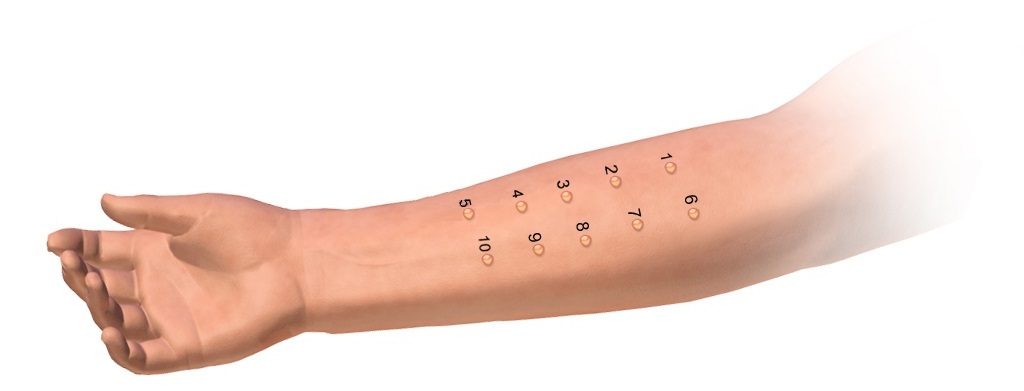
The skin prick test is the most commonly used method to evaluate environmental allergies. During this test, small amounts of suspected allergens are placed on the skin—usually on the forearm or upper back—and a small prick allows the allergen to enter the outer layer of skin.
If the patient is allergic to a substance, a small raised bump similar to a mosquito bite typically appears within about 15–20 minutes.
Because results are available quickly, allergists can often review findings and discuss treatment options during the same visit.
In some cases, a patient may have symptoms consistent with allergies but show negative results on initial skin prick testing. When this occurs, the allergist may recommend intradermal skin testing for certain allergens.
During intradermal testing, a small amount of allergen is injected just beneath the surface of the skin using a very small needle. This method introduces the allergen slightly deeper into the skin than a prick test and can detect sensitivities that may not appear during standard skin testing.
This test is not typically used for food allergy testing because of the increased likelihood of false-positive results with foods.
Intradermal testing is performed under medical supervision and results are evaluated after a short observation period. When appropriate, this testing may provide additional diagnostic information that helps the allergist develop a more precise treatment plan.
In some situations, your allergist may recommend blood testing to evaluate allergies. These tests measure the presence of allergen-specific antibodies in the bloodstream.
Rather than drawing blood in the office, Certified Allergy & Asthma Consultants orders allergy blood tests through the patient’s preferred laboratory. A small blood sample is collected at the laboratory and analyzed to identify potential allergy sensitivities.
Results are reviewed by your allergist and used to help guide diagnosis and treatment recommendations.
Patch testing is used to identify delayed allergic reactions, particularly those affecting the skin such as contact dermatitis.
During this test, small patches containing potential allergens are applied to the skin and left in place for a period of time to observe delayed reactions.
Before allergy testing, your allergist will review your medical history and discuss your symptoms and possible triggers. This evaluation helps determine which tests are most appropriate.
Depending on the type of testing performed, your visit may include:
Skin testing results are usually available within minutes, while blood test results may take a week or more.
To ensure accurate results, your allergist may recommend certain preparation steps prior to testing.
These may include:
Your care team will provide specific instructions before your appointment.
Identifying allergy triggers provides important information that helps guide treatment decisions.
Testing is an important step toward improving long-term allergy management and symptom control.

Patients trust Certified Allergy & Asthma Consultants for comprehensive allergy diagnosis and treatment.
Our specialists help patients:
With accurate diagnosis and expert care, many patients experience significant improvement in their allergy symptoms and overall quality of life.